The letter came home folded inside Daniela’s mathematics notebook, between a page of long division and a drawing of a horse that looked, her mother said, like a dog that had made plans. Rosa read it three times at the kitchen table, under the light that buzzed. The Colegio San Jerónimo was pleased to inform her that her daughter had been selected for a Continuity Review. A representative of the foundation would receive them on Thursday at nine, in the office by the park, the building with the blue door that had been painted so many times that the handle sat in a shallow well of paint.
Selected was a word that did a great deal of work in that letter. It appeared twice. The second time it carried promises behind it, listed in a clean column: a transport subsidy for the school year, a meal card for the cafeteria, tutoring in mathematics and English, and, in time, the possibility of a scholarship recommendation. Rosa taught English to other people’s children in the afternoons, in a front room with six plastic chairs, and she knew what a column of promises cost when you added it up honestly. She added it up anyway. The bus fare alone was a week of eggs.
On Thursday, she ironed Daniela’s uniform the night before and laid her own good blouse over the back of a chair. Daniela asked whether she should bring the notebook with the drawing, in case they wanted to see her work. Rosa said the letter had asked for the birth certificate and the school record and nothing about horses, and Daniela said the horse could wait in the notebook, then, in case of emergency.
The office was cooler than the street by a full season. A woman received them with the kind of smile that was practised in the mirror of other people’s gratitude, and she offered Rosa coffee in a cup so small it seemed to be practising too. On the desk there was a folder with Daniela’s name written in a hand so neat it looked printed, and inside the folder, Rosa saw, as it was opened, there were already pages. The school record. A photograph she did not remember being taken. A form with boxes, some of them already marked in pencil, lightly, the way you mark something you intend to be able to erase.
The questions began as conversation. Who lived at home. Rosa, the grandmother, Daniela. Whether the grandmother still worked. She cleaned rooms at a hotel when her knees allowed. Whether anyone in the family lived abroad. An uncle in Tampa who sent money at Christmas and called on the grandmother’s birthday and cried a little, every year, at the same point on the call. The woman wrote all of it down in the same printed hand, and her pen made no sound of judgment, and that was the part Rosa would remember later, the absence of any sound at all, a room where a family’s whole life could be set down on paper without a single page complaining about the weight.
Daniela sat with her hands folded and answered when she was asked. Her favorite subject. English, she said, and then, because she was her mother’s daughter, she added that mathematics was important too. The woman asked what she wanted to be. A veterinarian, Daniela said, for horses mostly. The woman wrote that down as well, and Rosa felt a small and unreasonable wish that some part of her daughter might stay out of the folder, one thing at least that belonged to the notebook and the kitchen table and nobody’s column of promises.
Then the woman turned the folder around, the way a doctor turns a screen, and explained the review. The foundation supported many children, she said, and support had to be organized, and organization required information, and information had to be gathered before it was needed, the way you store water before the dry months. There were categories, she said, and the categories were nothing to fear. Reliable. Uncertain. Dangerous. She said the words the way you name stations on a train line that you pass through on the way to somewhere better. Most children were Reliable. The word Dangerous she pronounced a fraction more quietly, as if it were asleep in the next room.
Rosa asked what made a child Dangerous.
The woman smiled again, and this smile had less practice in it, and more person. Circumstances, she said. A home in difficulty. An influence. Sometimes a child is classified by the company around the child, the way weather is classified by the coast it is approaching. The classification was not a punishment, she said. It was a way of knowing where help had to arrive first, and where it had to arrive with more care. She said the foundation had been building this for twelve years, patiently, the way you build anything that lasts, and she said it with pride, and the pride was real, and that was worse than if it had been false.
The last page of the form was different from the others. It had no boxes. At the top, printed in capitals, there was a question, and beneath it, four ruled lines, and the woman gave Rosa the pen and said the foundation asked every family the same question, in the family’s own words, because the answer told them more than any category could.
IF ONLY ONE STUDENT CAN RECEIVE HELP, HOW WOULD YOU DECIDE WHO DESERVES IT?
Rosa read it twice. In the front room with the six plastic chairs, she taught children to answer examination questions by first deciding what the question was really asking, and she sat in the cool office and did her own lesson the courtesy of taking it seriously. The question was asking who she would leave behind. It was asking her to practice leaving someone behind, in handwriting, so that later, when it was done by other hands, it would have been done a little by hers too. She thought of the boy on their street whose meal card had not been renewed after his father spoke too loudly at a meeting about the price of cooking oil. She thought of the word circumstances. She thought of weather approaching a coast.
Daniela was watching her. Daniela had the look she had at the kitchen table when the long division would not come out even, that patience children have before they learn that adults use it as a place to hide.
Rosa wrote on the first ruled line: I would give the help to the child in front of me. On the second line she wrote: And I would write down the name of every child I could not help, and I would keep the list, and I would read it until it was empty. She did not write on the third line. She put the pen down carefully, the way you put down something that belongs to someone else.
The woman read the lines and her face did the smallest thing. Then she turned the page over, and on the back there was the consent, a paragraph of print so fine it seemed to be standing at a distance, and beneath it a line for the parent’s signature, and beneath that, a line for the date. The consent said that the family agreed to the review and to the sharing of the review with the institutions that walked beside the foundation, schools and offices and other foundations, a whole quiet family of institutions, and that the family understood that support, once organized, followed the order the review established. Rosa read it all. She read it the way she had taught Daniela to read the question before the question, all the way to the end, where the real sentence usually lives.
She thought about the bus fare, which was a week of eggs. She thought about the meal card, and the tutoring, and the scholarship recommendation that shone at the end of the column like a town at the end of a road. She thought about her daughter’s name, printed by a careful hand, in a folder that had been opened before she arrived.
I will sign the assistance form, Rosa said. We accept the transport and the meals, and we are grateful. This page I would like to take home. I want to read it with my mother. In our house we read important papers out loud, all together, the way other families say grace.
The woman was quiet for a moment, and in that moment Rosa understood that the request had been made before, in this office, in this same tone of apology that was not an apology, and that there was a procedure for it, the way there is a procedure for everything that a machine has learned to expect. Of course, the woman said. Take the time you need. The review remains open. She closed the folder, and before she closed it, Rosa saw her take the pencil and mark something in one of the boxes, lightly, the way you mark something you intend to be able to erase.
They stamped nothing in front of her. That she appreciated later. Whatever was written about them would be written in another room.
Outside, the heat came back all at once, the way it does when a door opens in Havana in October, and Daniela asked whether the review had gone well, and Rosa said it had gone the way reviews go, and Daniela asked whether she would get the card for the cafeteria, and Rosa said yes, and that part at least was true, and Daniela said that then it had gone well. They walked to the bus stop because the subsidy began the following month, and Rosa paid the fare in coins, and found, standing in the aisle with her daughter’s notebook against her chest, that she was not sorry, and that she was afraid, and that the two things rode with her all the way home without asking her to choose between them.
That night the grandmother read the unsigned page out loud at the kitchen table, all the way to the end, where the real sentence lived, and then she folded it and put it in the drawer where the family kept the documents that mattered, the birth certificates and the deed and the photograph of a man standing in front of a house that no longer existed. Under the buzzing light, Daniela did her long division, and it came out even, and the horse in the notebook waited with its plans, and the page stayed in the drawer, unsigned, which was also a kind of answer, and the only one in the whole folder that the family had written themselves.
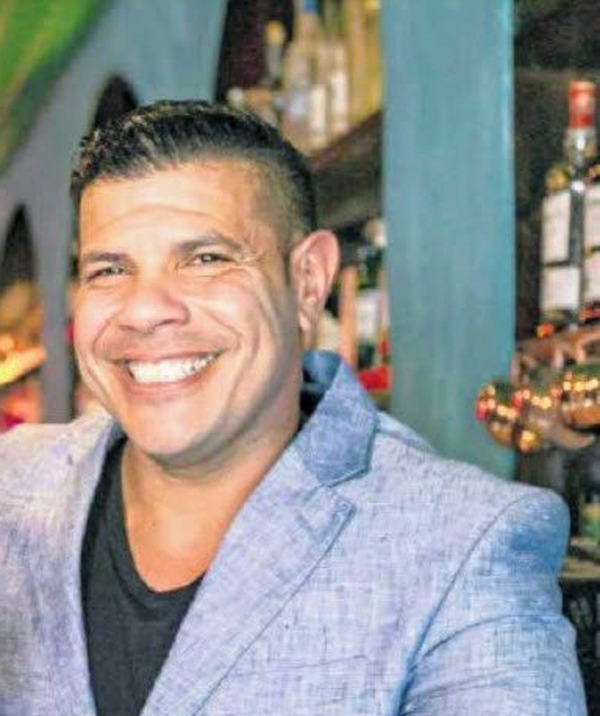
Tony Haber-Matos is a Cuban-American author and entrepreneur based in Miami, Florida. Born in Cuba, he immigrated to the United States as a teenager and later studied at Florida International University, where a poetry class first turned him toward the written word. He is the founder of Casa Santiago LLC and Qvivo Brands Inc. His debut novel, Lost Innocences: The Pact, was published by OreatePress in 2026 and appeared simultaneously in seven languages. “The Signature” is an original story set in the world of that novel. He is currently writing Part II of the saga.