Rain had come after the courtyard was swept, so the red clay of the Gyase quarters had gone to something between paste and glue. Bediako stood at its edge with his sandals in his hand, trying to decide whether to fight barefoot. The Ankobia sitting along the far wall watched him decide. They were not unkind about it. They had all stood where he was standing.
The war vest had been on his body for an hour and was already heavy. It was covered, front and back, in pouches the size of a thumb, each one stitched shut around herbs, a sliver of bone, a scrap of folded script written by a priest. Each was a suman, a charm, and together they made the asɛman, the vest that was supposed to turn a blade. Whenever he shifted his weight, they knocked against his ribs. It was meant to weigh about two large coconuts, but it felt like five. The whole thing smelled of crushed neem leaves and old woodsmoke.
On his head was the leopard-skin cap with a single eagle feather standing out of it. He had earned that cap in the dry season two years back, when he followed a roan antelope for three days beyond the last farms, killed her with one shot, and carried her home across his shoulders. People still told the story at the chief’s house. He had stopped correcting them, because the wrong parts were better.
But there was no forest to be good in today.
The man he was to fight crossed the yard without hurrying. Wɔfa Oboɔba wore a cloth knotted at the waist and nothing else, with a small woven pouch hanging from the cord. His chest and arms were crossed with old campaign scars, pale against the brown, and he stood on the earthen floor with his feet apart and his hands loose, like a man at a market stall waiting for the seller to name a price.
Wɔfa meant mother’s brother. It was what every recruit called the Ankobia who trained him, as if the king’s guard were one large and badly behaved family.
“You think like a hunter,” Wɔfa Oboɔba said. “I have watched you for a month. You find the blood, you wait for the wind to turn, you kill from a long way off.”
“It has worked,” said Bediako.
“On animals. Did the roan ever turn around and come looking for you?”
“She ran.”
“She ran. An animal runs, or it hides. A lizard that knows how to hide grows to become a crocodile. Even the clever ones, even the leopard, are clever inside their instinct. A man fights with instinct too, and with temper, and with a strong arm, and with a head that works out where you will be before you do. The head is the part that kills you.”
He came a step closer.
“In the forest you risk your ɔkra, the soul that was lent to you at birth. You risk your sunsum, your spirit, and your mogya, your blood. Against a man you risk the same three. You also risk something the antelope cannot take from you, and that is your ahoɔden.”
“Strength,” Bediako said, confidently flexing his hand around the sandal strap. “I have strength.”
“Ahoɔden is what you have left when the arm is finished. It is the part of you that wants to go on living after the rest has stopped asking. Lose it, and your spirit breaks before your bones do, and you walk to Asamando on your own two feet.” He tapped his temple twice. “Fa adwen hwɛ kan. Think, and look ahead. Today you look ahead, or you do not look at all.”
Bediako set his sandals against the wall. He would fight barefoot like Wɔfa.
Wɔfa Oboɔba opened the pouch at his waist and took out an egg. It was brown and a little speckled, with one small feather still stuck to the shell. He tossed it once from hand to hand, the way a boy weighs fruit gifted to him, and pressed it into Bediako’s left palm.
“Power is a responsibility, and responsibility is like holding this. Grip too hard and it runs through your fingers. Hold too loose, and it falls. Either way it breaks.”
“It’s an egg, Wɔfa.”
“Yes. Put it in your belt.”
Bediako opened the leather pouch on his amoaseɛ, his war belt, and laid the egg inside with more care than he had given anything that week. He folded the flap over it and pushed the bone toggle through its loop. It seemed to him the easiest thing he would be asked to do all day.
The weapon rack stood under the veranda. It held short swords, the quick curved ones the younger recruits liked, a hatchet, a long knife with a bone handle, and at the far end, leaning on their own weight, three akrafena.
“Take what you like,” Wɔfa said. “No shield. The only shield you will have today is your head.”
Bediako passed the short swords without looking at them. He wanted something that would end the matter in one stroke, so that nobody could say afterwards that he had needed two. He lifted the heaviest akrafena off the rack. The blade was broad and thick in the back, made for hacking and chopping, the kind of sword that breaks bone instead of slipping between it. The hilt ended in a ball of cast brass the size of a plum, there for balance, and in a tight space for a jaw or a collarbone.
“Good choice,” Wɔfa said. Bediako could not tell whether he meant it. “Do you know what that is?”
“An akrafena.”
“A soul sword. Kra, soul. In your right hand, it speaks to your kra, to the fire that is yours and nobody else’s. You have not been through the fire the way the blade was. You carry yourself like one of the Ankobia already. This morning we find out whether you are even the equal of the Afenasoafoo, who carry the king’s swords for him and never need to know how to use them.”
Two of the guards along the wall coughed into their hands.
Wɔfa went to the middle of the yard and lowered himself into a wide stance, knees bent, weight settled in his hips.
“I have no weapon,” he said. “I am armed all the same. I have my body and my mind, my instinct, my temper, my strength, and thirty years of this. They are my sword and my shield. Come.”
Bediako did not run at him. On that earthen floor nobody stood upright, and a man who did would be on his back inside five breaths. He lowered himself until his thighs burned and came forward in short stamping steps, feet flat, never lifting them clear of the clay.
At four paces he swung. It was a big overhead cut, started from behind his shoulder and meant to finish somewhere near Wɔfa’s belt, and he put the whole weight of the vest behind it. He heard the air tear.
Wɔfa was not there. He had gone down, not back, knees folding and lead foot hammering into the clay with a flat slap that Bediako felt in his own heels. It was the stamp the dancers do at festivals, the one that looks like showing off and is really a man nailing himself to the ground. The blade went over his head. Stiff fingers were already driving up under Bediako’s ribs, and Bediako twisted away and took half of it on the vest. The pouches grunted.
“Death,” said Wɔfa, moving now, “is like the hair around a man’s neck. We all have it. We shall all go to it in the end.”
He had stopped moving in any rhythm. His head ducked and rose and slid sideways, his shoulders rolled, and the whole body seemed to ask Bediako to look at the wrong part of it. It was how a leopard goes through tall grass. Bediako had once watched an ɔsebɔ do this from the fork of a tree during the rains and had never been able to say where the animal would be next. He cut at Wɔfa’s throat, a flat stroke, and the blade passed a hand’s width in front of it. The distance was wrong. Wɔfa was not fast. He simply kept being a few steps ahead. Bediako couldn’t understand why he felt blindsided.
“Ɔpɛ sɛ otena ase,” Wɔfa murmured, slipping inside the reach of the arm. He wants to stay alive. It was said the way you would remark on the weather, and it took Bediako a moment to see that he was the one being talked about.
He wrenched the sword around and brought the brass ball up toward Wɔfa’s collarbone. It was the blow from the stories, the one that makes a shoulder come apart. Wɔfa did not step back. He pivoted on the ball of his lead foot, his rear leg swung out in a wide crescent, and the pommel hit nothing. When Bediako looked, Wɔfa was at his flank, in the one place he could not see. Bediako threw the flat of the blade across in time to catch a palm strike meant for his neck, but the force of catching it turned him, and in turning he gave up his elbow. Wɔfa trapped it, bent it back against the joint, and kicked the standing leg out from under him.
Bediako hit the clay on his back, and the breath left him all at once before realising he lost his stance. For a moment he saw only the white sky between the roof-poles. The sound he made was not a word.
“Up,” Wɔfa said. He was circling without hurry, like a man looking for somewhere to sit. “Yɛnte gyae. We don’t stop. Ne kra pɛ nkwa. His soul wants life. Yours seems to have gone for a walk.”
Bediako got up. His arms burned, and the sword that had felt like part of his hand now felt like a log.
“Wɔwɔ ahoɔden sɛ wɔbɛtena ase,” Wɔfa said. “They have the strength to go on living. We will see if that is true of you.”
His head was hot now. He knew what he should be doing. Behind the knee. The heel cord above the foot. The inside of the wrist, to make a man drop his weapon. The hollow under the arm, where a vest ends, and nothing protects. He had learned every one by heart, and he used none of them. He swung and swung, wide, wasteful, with a noise coming out of his chest. Wɔfa went around the blows, and the one that almost landed he would have taken across the vest.
“Be steady like the baobab tree, ɔdadeɛ,” Wɔfa said, “and quick like the snake, ɔwɔ. You are neither. Even the earth is solid, but the chameleon still puts each foot down as if it might not hold.”
“Stand still or fight me properly,” Bediako said through his teeth. The vest had already been weighing him down, but now with Wɔfa dancing around him, the sword felt thrice what it weighed before.
“Your fire is up, isn’t it? Your ogya.” Wɔfa sidestepped another clumsy chop. “Do you remember who kept the first fire? The Sky Spirits. They said men were too careless to be trusted with it. Then a child stole one ember in a hollow gourd and carried it down to the village in the cold, and the village lived. A fire can rage, or it can dim. Careless hands burn the house down. Yours is raging, Bediako, and you are what it is burning. No matter how hot your anger is, it cannot cook an egg.”
Bediako gathered everything he had left into a last overhead heave, the sword high over his head and his whole body behind it, meaning to bring the old man down and pin him in the earthen floor and end it. Wɔfa did not even brace. He stepped aside, almost lazily, and Bediako went past him on the force of his own blow, three long stumbling steps, until the sword point bit into the clay and held him up.
He stood there panting, the blade dragging a furrow behind him in the hardened mud of the earthen floor.
When he turned, Wɔfa Oboɔba was three paces away. He was not breathing hard. There was clay on one calf and a single bead of sweat on his chest. In his right hand, between thumb and forefinger, held up where the light could reach it, was a brown egg with a feather stuck to it.
Bediako’s free hand went to his belt before he knew it had moved. The flap of the pouch hung open. The bone toggle was out of its loop. There was nothing inside.
He tried to find the moment. The lock, the sweep, the stumble just now. It could have been any of them. All morning he had been so busy swinging at a man that he had never once felt a hand at his waist, and the man had been close enough to speak into his ear.
The sword left his fingers. He had not decided to let it go; it simply stopped being something he could hold, and fell into the mud-clay floor with a flat, heavy sound. His knees went after it. He knelt with his head down, and for a while all he could hear was his own breathing and the pouches on his vest knocking against his ribs.
Wɔfa Oboɔba came over and crouched until their eyes were level. He took Bediako’s left hand, turned it palm up, and laid the egg in it. It was whole. There was a smear of clay down one side and nothing else wrong with it.
“Don’t despair,” he said quietly. “Obi nnim obrempon ahyease. Nobody knows the beginning of a great man.”
Bediako looked up. His eyes stung, and he was ashamed of that.
“Mmere dane. Time turns. I knelt on this same floor once, at about your age, and the man who took my egg is dead now, and I am still here to tell it badly.” He patted Bediako’s shoulder, twice, as one pats a goat that has been sold. “Control your mind. Only after that will you learn to wield the sword.”
Along the wall, the Ankobia had found things to look at in the sky.
Bediako closed his fingers around the egg, not hard and not loose. He stayed there on his knees, with the old man crouched beside him, and for a long while neither of them spoke, and the egg did not break.
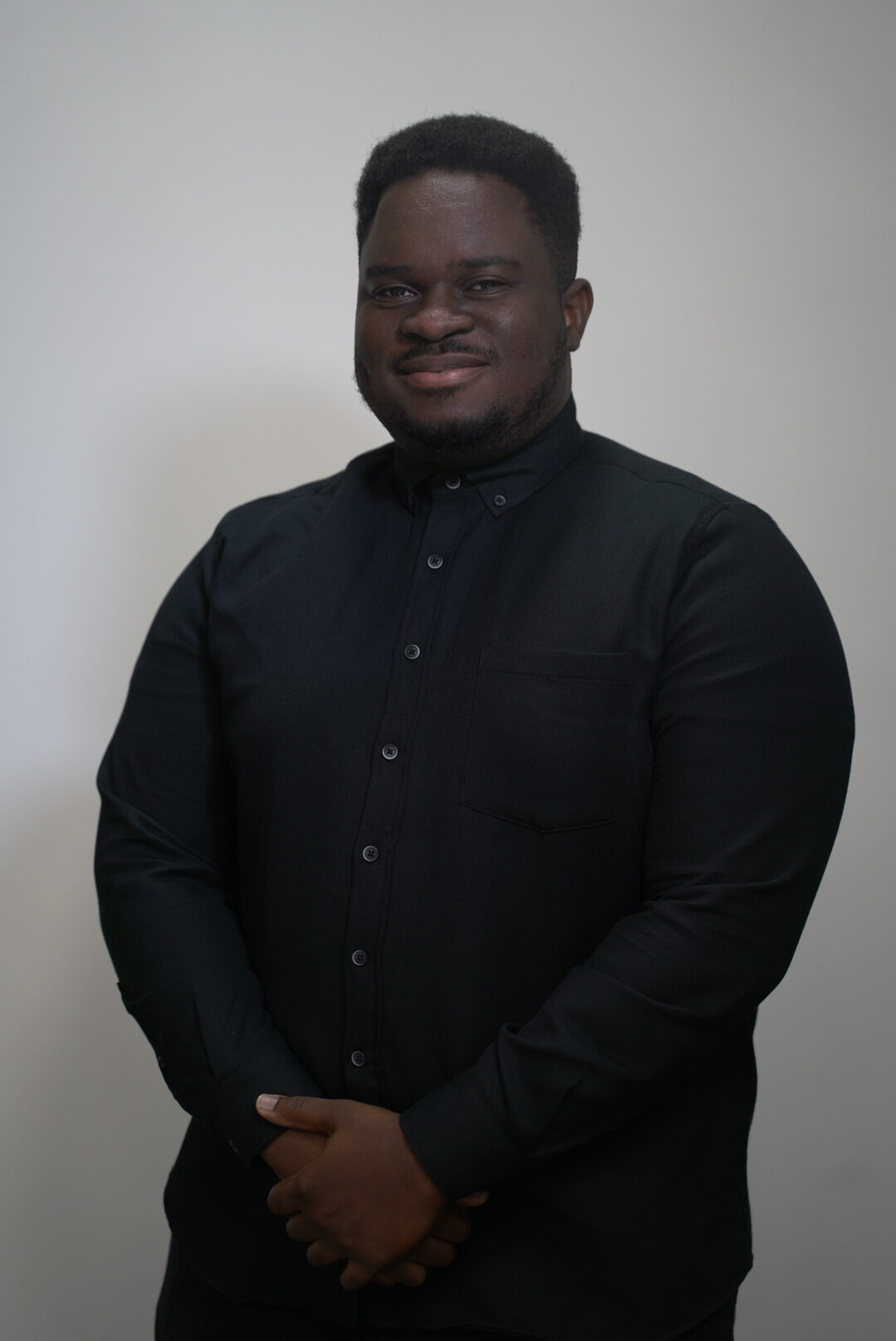
David Letsa is a Ghanaian physician, storyteller, and medical writer. His prose explores West African history, identity, heritage, and human vulnerability. Outside of medicine and narrative craft, he is the co-founder of Today’s Travel Agency.